

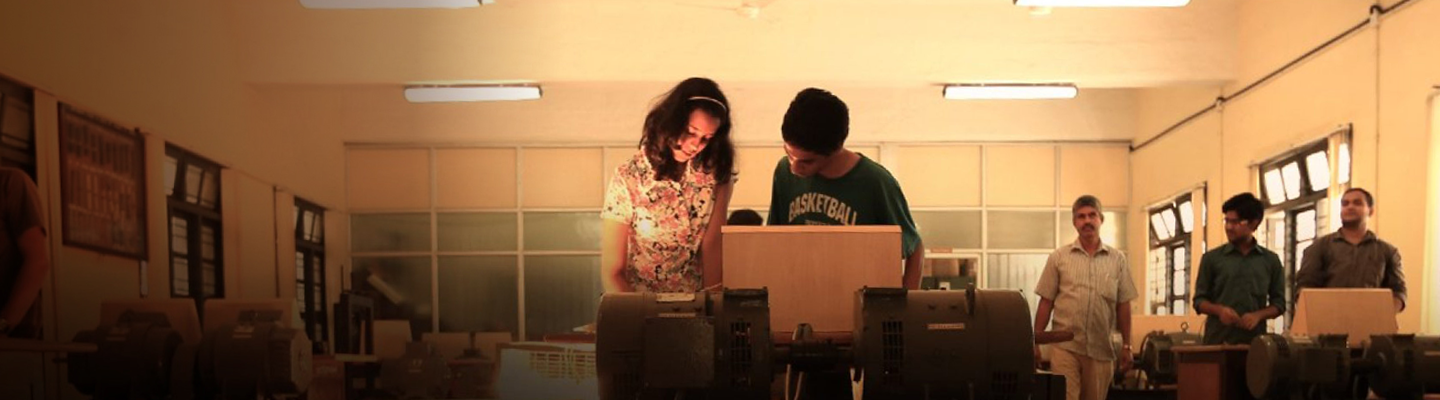
Electrical and Electronics Engineering - Overview
The B. Tech. The program in Electrical & Electronics Engineering at MIT offers a unique mix of electrical, electronics, and computer-related courses, enabling students to pursue professional careers or higher studies in any of these areas. The curriculum, based on a credit scheme, is updated periodically to reflect changes in the electrical & electronics profession, in consultation with industry experts and renowned academic institutions.
The program has the following benefits:
- The curriculum, based on a credit scheme, is updated periodically to reflect changes in the energy management, auditing, and lighting professions in consultation with experts from industries and renowned academic institutions. Some of the innovative practices are included in the curriculum, such as practice school, mini projects associated with lab and theory courses, continuous evaluation, and relative grading.
- The program has excellent links with leading industries and has a well-connected alumni network. Infrastructure facilities include well-equipped laboratories, including the Analog & Digital Lab, Power Electronics & Drives Lab (UG & PG), Electrical Machinery Lab, Power & Energy Systems Lab, System Simulation Lab, Measurements & Instrumentation Lab, Electrical Vehicle Lab, Lighting Simulation & Measurements Lab (PG), and Library.
- The program organizes regular visits to reputed industries and power stations.
- All the lecture halls are provided with state-of-the-art facilities such as LCD Projectors, audiovisual aids.
- The program also arranges guest lectures from academic and industrial experts of repute regularly for the benefit of faculty as well as students.
- The students are encouraged to present and publish their project work in reputed national/international conferences/journals.
BTech EEE Programme Educational Objectives (PEO)
PEO 1: Demonstrate their expertise in the design and evaluation of electrical and electronics devices and systems for contemporary problems.
PEO 2: Practice engineering profession with highest professional ethics and competency.
PEO 3: Exhibit leadership and teamwork with effective communication, while working towards organizational goals, in diverse cultural and interdisciplinary backgrounds.
PEO 4: Engage in lifelong learning, career enhancement, pursuing higher education and research & adapt to changing environmental needs.
BTech EEE Programme Outcomes (PO)
PO 1: Engineering Knowledge: Apply knowledge of mathematics, natural science, computing, engineering fundamentals, and an engineering specialization to develop the solution of complex engineering problems.
PO 2: Problem Analysis: Identify, formulate, review research literature and analyze complex engineering problems reaching substantiated conclusions with consideration for sustainable development.for sustainable development.
PO 3: Design/Development of Solutions: Design creative solutions for complex engineering problems and design/develop systems/components/processes to meet identified needs with consideration for the public health and safety, whole-life cost, net zero carbon, culture, society and environment as required.
PO 4: Conduct Investigations of Complex Problems: Conduct investigations of complex engineering problems using research-based knowledge including design of experiments, modelling, analysis & interpretation of data to provide valid conclusions.
PO 5: Engineering Tool Usage: Create, select and apply appropriate techniques, resources and modern engineering & IT tools, including prediction and modelling recognizing their limitations to solve complex engineering problems.
PO 6: The Engineer and The World: Analyze and evaluate societal and environmental aspects while solving complex engineering problems for its impact on sustainability with reference to economy, health, safety, legal framework, culture and environment.
PO 7: Ethics: Apply ethical principles and commit to professional ethics, human values, diversity and inclusion; adhere to national & international laws.
PO 8: Individual and Collaborative Team work: Function effectively as an individual, and as a member or leader in diverse/multi-disciplinary teams.
PO 9: Communication: Communicate effectively and inclusively within the engineering community and society at large, such as being able to comprehend and write effective reports and design documentation, make effective presentations considering cultural, language, and learning differences.
PO 10: Project Management and Finance: Apply knowledge and understanding of engineering management principles and economic decision-making and apply these to one’s own work, as a member and leader in a team, and to manage projects and in multidisciplinary environments..
PO 11: Life-long Learning: Recognize the need for, and have the preparation and ability for i) independent and life-long learning ii) adaptability to new and emerging technologies and iii) critical thinking in the broadest context of technological change.
BTech EEE Programme Specific Outcomes (PSO)
PSO 1: Analyse the operation and control of electrical systems by applying the engineering knowledge.
PSO 2: Design and analyse electronic systems for specified applications.
PSO 3: Develop models and intelligent systems by applying modern engineering tools and programming skills.
Career Opportunities in Electrical and Electronics Engineering
Some of the major companies where the students get placed are ABB, Deloitte, Ericsson Global, GE Health Care, GMR Energy, Grasim, HCL, JSW Steel, L&T, L&T-ECC, Moog, M&M, Nomura, Philips Electronics, Schneider Electricals, TCE, Tesco, Wipro VLSI, WS Atkins, Tata Motors, Reliance, Toshiba, Accenture, HCL, IBM, iGATE PATNI, Mphasis, TCS, Wipro and Infosys.
B. Tech EEE - Outline
B. Tech. Electrical & Electronics Engineering course outline - 2022 Syllabus
Industry Connect
In association with

The Center of Excellence for E-Mobility, established with L&T EduTech, offers cutting-edge training and research in EV technology. Equipped with advanced tools like Dspace MicroLabBox and BMS setups, it enables students to innovate in e-mobility. Industry-aligned courses, such as "Foundations of EV and Hybrid Vehicles," boost career prospects through hands-on expertise.
Key Dates & Deadlines
15
Mar 15 26
Mar ' 26
Last date to Apply
'
Tentative Course Commencement Date
Indian Students Apply
Manipal Academy of Higher Education not only caters to one’s academic needs, but also lays emphasis on all-round development of its students.
International Students Apply
Manipal Academy of Higher Education not only caters to one’s academic needs, but also lays emphasis on all-round development of its students.
Indian Students Apply
Manipal Academy of Higher Education not only caters to one’s academic needs, but also lays emphasis on all-round development of its students.
International Students Apply
Manipal Academy of Higher Education not only caters to one’s academic needs, but also lays emphasis on all-round development of its students.
Electrical and Electronics Engineering Course Duration
4 Years (8 semesters).


Facilties
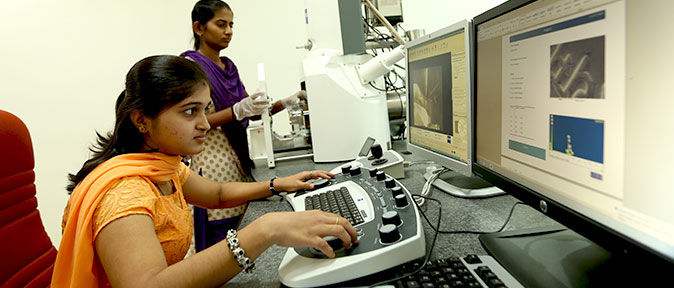
Laboratories
World-class laboratories give learning a practical dimension
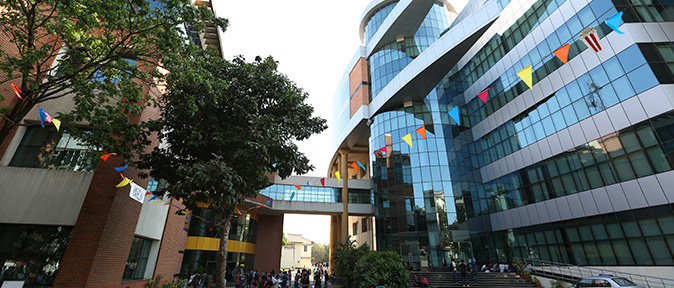
Innovation Centre
State-of-the-art Innovation Centre to facilitate multi-disciplinary research
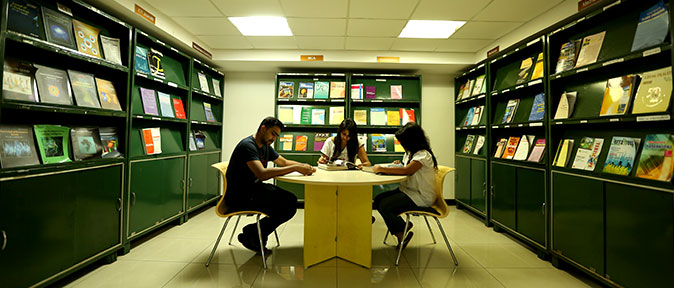
Libraries
Libraries have excellent resources for reference and study
MUTBI
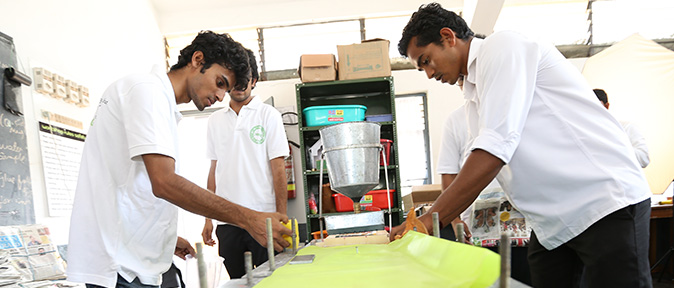
Paper tree - A green initiative by MIT students of MUTBI

Computing Facility
Wi-fi campus with modern computing and digital facilities

Next Steps
Get the perfect start to your dream career by joining the Institution of Eminence