


Civil Engineering - Overview
The graduates in Civil Engineering degree plays a vital role in fulfilling the societal infra-structural needs and demand. With India being a developing country and one of the fastest growing economy has created wide scope for civil engineers. The Civil Engineering degree course at MIT Manipal focuses on planning and designing of industrial and residential buildings, hydraulic structure, water supply and sanitation systems and transportation infrastructure. After the successful completion of course, graduates have wide opportunities to work in private and public sectors and industries (L & T , GMR, HCC, etc). Graduates also have scope for pursuing higher studies and research.
Civil Engineering Programme Educational Objectives (PEO)
PEO1: Exhibit technical and professional skills in the field of civil engineering towards sustainable infrastructural needs for the societal benefit.
PEO2: Build competency to be employable by organizations or to be an entrepreneur maintaining professional integrity and ethics.
PEO3: Pursue higher education in institutes of excellence and exhibit capabilities for research and development in the field of engineering.
PEO4: Develop communication skills to present updated technological changes and necessity of adapting innovative practices to stakeholders in particular and society at large.
PEO5: Apply civil engineering knowledge in conjunction with multidisciplinary approach to adapt to technological advancements with an emphasis on lifelong learning.
Civil Engineering Programme Outcome (PO)
PO1 Engineering knowledge: Apply the knowledge of mathematics, science, engineering fundamentals, and an engineering specialization to develop the solution of complex engineering problems.
PO2 Problem analysis: Identify, formulate, research literature, and analyze complex engineering problems reaching substantiated conclusions with consideration for sustainable development.
PO3 Design/Development of solutions: Design creative solutions for complex engineering problems and design/develop systems/components/processes to meet identified needs with consideration for the public health and safety, whole-life cost, net zero carbon, culture, society and environment as required.
PO4 Conduct investigations of complex problems: Conduct investigations of complex engineering problems using research-based knowledge including design of experiments, modelling, analysis & interpretation of data to provide valid conclusions.
PO5 Engineering tool usage: Create, select and apply appropriate techniques, resources and modern engineering & IT tools, including prediction and modelling recognizing their limitations to solve complex engineering problems.
PO6 The engineer and the world: Analyze and evaluate societal and environmental aspects while solving complex engineering problems for its impact on sustainability with reference to economy, health, safety, legal framework, culture and environment.
PO7 Ethics: Apply ethical principles and commit to professional ethics, human values, diversity and inclusion; adhere to national & international laws.
PO8 Individual and collaborative teamwork: Function effectively as an individual, and as a member or leader in diverse/multi-disciplinary teams.
PO9 Communication: Communicate effectively and inclusively within the engineering community and society at large, such as being able to comprehend and write effective reports and design documentation, make effective presentations considering cultural, language, and learning differences
PO10 Project management and Finance: Apply knowledge and understanding of engineering management principles and economic decision-making and apply these to one's own work, as a member and leader in a team, and to manage projects and in multidisciplinary environments.
PO11 Life-long learning: Recognize the need for, and have the preparation and ability for i) independent and life-long learning ii) adaptability to new and emerging technologies and iii) critical thinking in the broadest context of technological change.
Civil Engineering Programme Specific Outcomes (PSO)
PSO1: Graduates will be able to integrate Civil Engineering principles with testing, modelling, simulation, and sustainable practices to design resilient engineering systems, with an emphasis on safety, creativity, and teamwork.
PSO2: Apply fundamental knowledge of civil engineering concepts, analytical methods, and modern computational tools to analyze, design, and facilitate construction processes related to infrastructure systems while adhering to relevant standards, codes, and sustainable practices.
Outline - BTech Civil Engineering
BTech Civil Engineering course outline (2022)
BTech Civil Engineering course outline (Admission: 2018 - onwards)
BTech Civil Engineering course outline (Admission: 2014 - 2017)
Industry connect

An agreement was signed with L&T EduTech on 19th February 2024. Accordingly L&T EduTech shall offer Integrated Program in Civil Engineering to B. Tech Civil Engineering students of MIT Manipal. The program includes 10 theory courses from various domain of Civil Engineering focusing the industry requirements. These courses grouped as core, electives and minor specilisation will be offered inline with the B.Tech 2022 curriculum.

The MoU betweent HILTI India Pvt. Ldt and MAHE was initiated on 29th November 2023. Under this agreement, Hilti and MAHE will jointly develop fastening system in construction, organise workshop and awareness program, conduct Continuous Professional Development (CPD) workshop/seminars for in-service engineers/students, students training, internship, students' projects and publications.

The scope of the agreement between Capricot Technologies and MAHE includes setting up BENTLEY powered laboratory in Civil Engineering department of MIT, Licensing Bentley academic subscriptions, issue “BENTLEY course completion certificate” to each of the students after completing the course successfully. Capricot Technologies will conduct virtual session on two selected Bentley products for every sem. on campus premises - once in 6 months. The virtual sessions including webinars on topics of concern is also the part of agreement.
Under this MoU, NHAI will offer internship to 20 number of UG/PG students with a stipend to conduct study on National highway 66 stretch:Kundapur( Km.283.300) to Surathkal(358.686) and Nantoor(Km.1.900) to Talapady(Km.17.200). The scoup of the MoU also include the knowledge exchange among the peers.

The scope of the agreement between DK Nirmiti Kendra and deparment of Civil Engineering, MIT Manipal include, the department of Civil Engineering MIT, Manipal shall make provisions to share their respective R&D facilities, permit the exchange of software and other materials. DK Nirmiti Kendra has agreed to provide internship to MIT students of department of Civil Engineering MIT Manipal.

The goal of this partnership is to offer valuable practical training, encourage creativity, and deepen comprehension of real-world sustainability challenges. This strategic alliance between MAHE and Vrtta Green Solutions is expected to lead to pioneering solutions and make a substantial contribution to the progress of environmental engineering practices. . The MoU entails offering paid internships for Master's students specializing in Environmental Engineering, as well as other areas within Civil Engineering.
Key Dates & Deadlines
30
Apr 30 26
Apr ' 26
Last date to Apply
'
Tentative Course Commencement Date
Indian Students Apply
Manipal Academy of Higher Education not only caters to one’s academic needs, but also lays emphasis on all-round development of its students.
International Students Apply
Manipal Academy of Higher Education not only caters to one’s academic needs, but also lays emphasis on all-round development of its students.
Indian Students Apply
Manipal Academy of Higher Education not only caters to one’s academic needs, but also lays emphasis on all-round development of its students.
International Students Apply
Manipal Academy of Higher Education not only caters to one’s academic needs, but also lays emphasis on all-round development of its students.
Civil Engineering Course Duration
4 Years (8 semesters).


Meet Our Faculty
Next Steps
Get the perfect start to your dream career by joining the Institution of Eminence

.png.transform/manipal-edu-transform-width-height-416px/image.png "download prospectus")
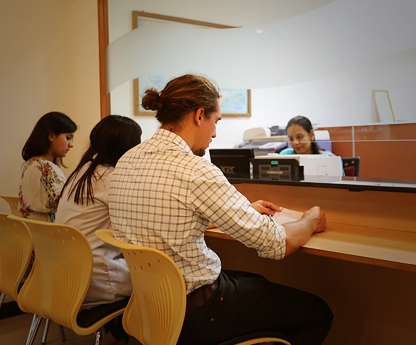
Facilities
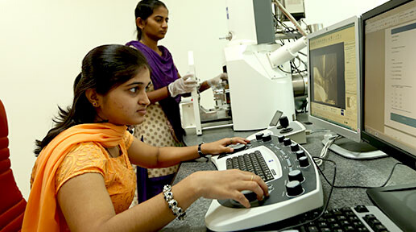
Laboratories
World-class laboratories give learning a practical dimension
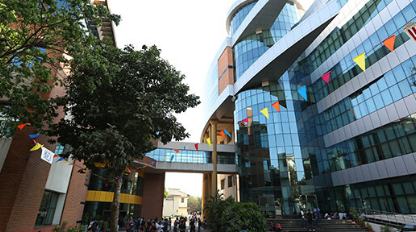
Innovation Centre
State-of-the-art Innovation Centre to facilitate multi-disciplinary research
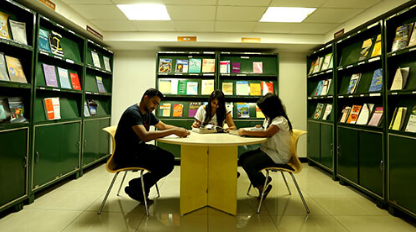
Libraries
Libraries have excellent resources for reference and study
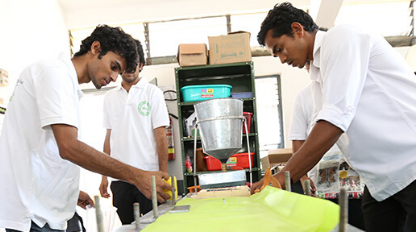
MUTBI
Paper tree - A green initiative by MIT students of MUTBI

Computing Facility
Wi-Fi campus with modern computing and digital Facilities