
Overview
The School of Civil and Chemical Engineering (SCCE) at Manipal Institute of Technology (MIT), Manipal, a constituent unit of Manipal Academy of Higher Education (MAHE), is a multidisciplinary academic entity formed through the integration of the Departments of Civil Engineering (1957), Chemical Engineering (1969), and Biotechnology (2005). Built on decades of academic excellence, the school aligns with MAHE’s vision of high-quality education, research, innovation, and societal impact.
The school offers undergraduate, postgraduate, and doctoral programs in Civil and Chemical Engineering, Biotechnology, Biological, and Earth Sciences domains that emphasize strong theoretical foundations, field-based and laboratory-intensive learning, modern analytical practices, and outcome-based education in line with AICTE, UGC, and NBA guidelines. The curricula are designed to prepare students for professional practice, higher studies, entrepreneurship, and lifelong learning. SCCE fosters a vibrant research and innovation ecosystem rooted in interdisciplinary collaboration across domains of Civil Engineering, Chemical Engineering, Biotechnology, Earth Sciences, Biological and Environmental Sciences to address real-world challenges.
Faculty and students actively engage in funded research, consultancy, and collaborative projects with industries, research organizations, and government agencies. Key thrust areas include:
- Sustainable Infrastructure, Environmental Engineering , Water Resources, Geotechnical Engineering, Transportation Engineering, Construction & Management.
- Solid Earth processes and tectonics, mineral resources and exploration, Earth surface processes and sediment dynamics, Earth system science and climate–paleoclimate studies, and environmental geoscience.
- Energy & Process Engineering, Catalysis & Nanotechnology, Process Control, Molecular Simulations, Pollution Monitoring & Remediation, Life Sciences, Drug Delivery Systems.
- Life Sciences, Bioprocess Engineering, Bioinformatics, Drug design & Delivery, Environmental & Pharmaceutical Biotechnology, Bioenergy, Sustainability, and Healthcare
With experienced faculty, state-of-the-art laboratories, field facilities, strong industry and institutional partnerships, and a focus on interdisciplinary and societal relevance, the school is committed to develop and nourish the young talent to globally competent Civil and Chemical engineers, Biotechnologists, Earth scientists, and researchers who contribute meaningfully to society, sustainability, and the profession.
Vision and Mission
Vision:
"To foster excellence in engineering education, research, and technological advancement through innovation, teamwork, and synergy in Civil, Chemical, Earth Sciences and Biotechnology".
Mission:
To nurture technically competent and ethically responsible engineers through a holistic teaching–learning process.
To prepare the students to face the societal challenges and to meet the needs of the stakeholders through innovative practices.
Program
The School of Civil and Chemical Engineering offers the following programs:
B. Tech Civil Engineering: B.Tech in Civil Engineering (since 1957) involves the application of mathematics, science and technology in planning, designing, construction and management of buildings and infrastructures. The course imparts knowledge in the areas of Building Technology, Fluid Mechanics, Environmental Engineering, Structural Engineering, Water Resources Engineering, Surveying, Geotechnical Engineering, Transportation Engineering, Geoinformatics, and so forth. Minor specialisations in the aforementioned subjects of Civil Engineering, as well as other fields such as Material Science, Business Management, and Computational Mathematics, are available through the curriculum. Students can also choose from a variety of online courses offered by reputable foreign universities and other online platforms.
MIT- Macquarie University Dual Degree Program: This is a dual degree program that enables students of Civil Engineering program to earn two undergraduate degrees in four years. Students begin their academic journey by enrolling in and successfully completing the first two years of the Bachelor of Technology (BTech) program in the Civil Engineering stream at the Manipal Institute of Technology (MIT). They are then transfered to Macquarie University to complete the remaining two years of the Bachelor of Engineering (Honours) program. Graduates of this program earn two internationally recognized degrees from prestigious institutions, MIT and Macquarie University, providing them with a competitive edge in the global job market and advanced opportunities in their field.
B.Tech-Chemical Engineering: The B.Tech. program in Chemical Engineering was established in 1969 to provide students with a comprehensive understanding of theoretical concepts and strong experimental skills. Since 2016, this undergraduate program has been accredited by the National Board of Accreditation (NBA). We are ranked in the 401–450 band in the QS World University Rankings by Subject for 2025. Additionally, we offer a 2+2 Dual Degree Program in collaboration with Monash University, Australia, allowing students to earn a B.Tech. in Chemical Engineering from both institutions. In response to the evolving demands of Industry 4.0, the program has been updated to include current trends and requirements. This includes integrating artificial intelligence and machine learning in chemical engineering, molecular simulations, green chemistry, and computer-aided simulations for chemical process plants.
B.Tech - Biotechnology: The B. Tech. program in Biotechnology (since 2005) offers a blended curriculum with multiple areas of science, technology and engineering focusing on research. The program provides a pragmatic approach for an enriched learning experience with a research focus. This program has been accredited by the National Board of Accreditation (NBA) for 6 years (from 2022-23 up to 30-06-2028). We are consistently ranked No.1 in the EducationWorld ranking. The program curriculum provides minor specialization in the areas related to medical and environmental biotechnology. Equipped with a total of 13 laboratories, the program offers hands-on experience in all aspects of biotechnology.
M.Tech in Structural Engineering: The M. Tech. in Structural Engineering (since 1992) is a two-year postgraduate program that covers advanced design and safety techniques for residential and industrial infrastructures. The program's curriculum is learner-centered, industry-focused, and research-driven, allowing engineers plenty of opportunities to advance their careers or pursue research after graduation.
M.Tech in Construction Engineering and Management: The M. Tech. in Construction Engineering and Management (since 1989) is a two-year postgraduate program that incorporates most current concepts in construction planning, scheduling, management, and safety. The syllabi emphasise developing the managerial abilities needed in the construction business and being research driven. After completing the degree, the specialist will have numerous chances to work in government departments, the public and private sectors, academia, and research.
M.Tech in Environmental Engineering: The M. Tech. in Environmental Engineering (since 2010) is a two-year postgraduate program that teaches students the current concepts in water quality, solid waste and sewage waste management, effluent treatments, pollution control, environmental safety, risk assessment, and management. This is a unique course that can be pursued by the graduates of Civil, Environment, Chemical and Mechanical Engineering disciplines.
M.Tech-Chemical Engineering: The M.Tech in Chemical Engineering (since 2010) is a two-year full-time postgraduate program focusing on advanced theoretical and practical aspects of chemical engineering. The program builds advanced competencies in areas like sustainable engineering, process modelling, and green technologies to prepare students for industry and research roles.
M.Tech - Industrial Biotechnology: The M. Tech in Industrial Biotechnology (since 2010) provides a platform to mould the graduate students with all the technical skills needed for employment in the diverse areas of biotechnology, especially industry and research-based careers. The curriculum of the programs provides an equal weightage to the core principles of biological sciences, computational analysis and process engineering principles applied to biotechnology.
M. Sc. - Geology: The M.Sc. Geology programme (since 2015) prepares students for careers in mineral and groundwater exploration, geological mapping, environmental monitoring, disaster assessment, and research. The programme emphasizes strong field training by in-house faculty and experts from the Geological Survey of India, shipboard exposure, and industry-linked projects with mining companies. Students are encouraged to pursue international internships, national-level student engagements, and faculty-guided mini research projects leading to peer-reviewed publications.
M.Sc - Computational Molecular Science: The M. Sc in Computational Molecular Science program (since 2025) is designed to empower students with advanced skills and knowledge for thriving careers in research, pharmaceuticals, chemicals, and energy-related industries. It also serves as a solid foundation for those aspiring to pursue a Ph.D. or other professional training programs. This cutting-edge program offers comprehensive training in computational and molecular sciences alongside foundational insights into regulatory frameworks, intellectual property, and research ethics. These additional disciplines enhance students' expertise and competitiveness, preparing them to excel in the rapidly growing fields.
The School of Civil and Chemical Engineering offers full-time and part-time Ph.D. programmes in the domains of Civil Engineering, Chemical Engineering, Biotechnology, Biology, Earth & Environmental Science. The School provides a strong research ecosystem supported by experienced faculty and state-of-the-art facilities. The broad research thrust areas (not limited to) include Sustainable Infrastructure; Environmental Engineering; Water Resources Engineering; Geotechnical Engineering; Transportation Engineering; Construction Engineering and Management; Solid Earth processes and tectonics; Mineral resources and exploration; Earth surface processes and sediment dynamics; Earth system science and climate - paleoclimate studies; Environmental Geoscience; Energy and Process Engineering; Catalysis and Nanotechnology; Process Control; Molecular Simulations; Pollution Monitoring and Remediation; Life Sciences; Drug Delivery Systems; Bioprocess Engineering; Bioinformatics; Biotechnology; Sustainability; and Healthcare-driven Solutions. Click here to know more.
In this four-year dual degree pathway, students complete the first two years of the BTech in Chemical Engineering at Manipal Institute of Technology (MIT), Manipal. They then transfer to Monash University, Australia, for the final two years to pursue the Bachelor of Engineering (Honours) in Chemical Engineering. Upon successful completion of all program requirements, students are awarded two undergraduate degrees—a BTech from MIT Manipal and a Bachelor of Engineering (Honours) from Monash University—providing strong international academic recognition and career prospects.
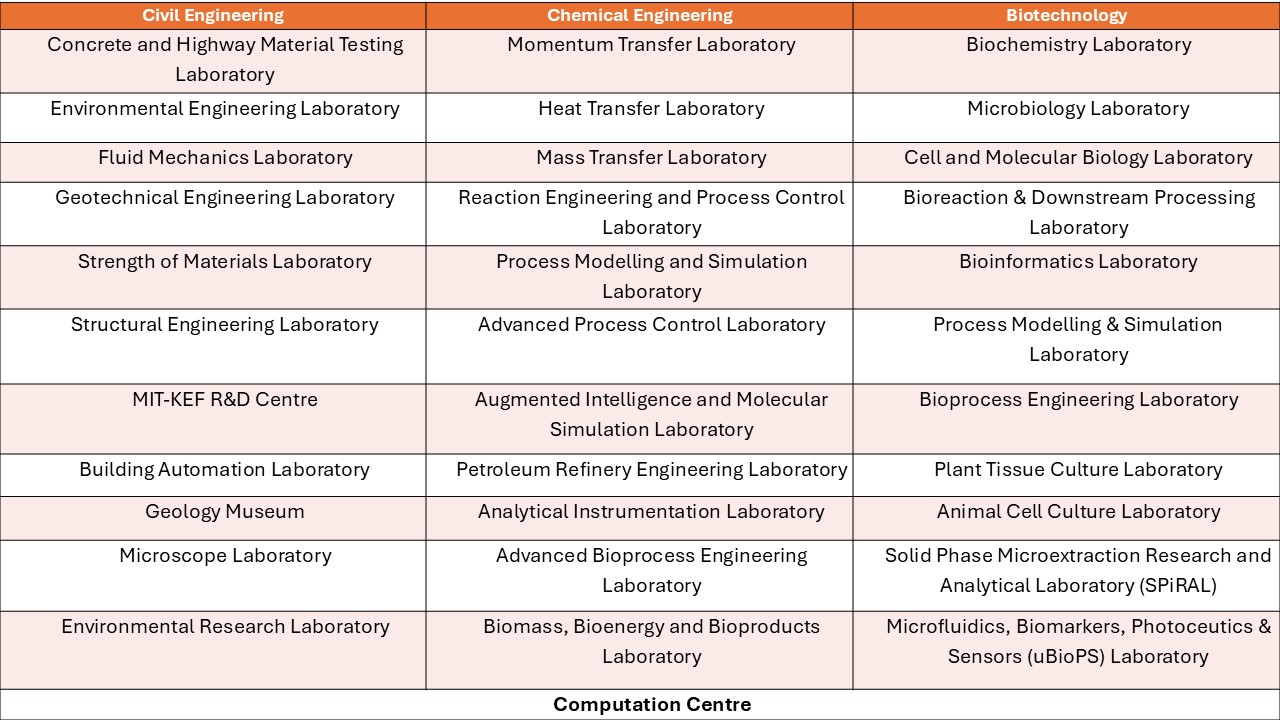
Laboratory Facilities
The School of Civil and Chemical Engineering is equipped with laboratories that support undergraduate and postgraduate teaching, advanced research, and consultancy. These state-of-the-art facilities promote experiential learning, interdisciplinary research, and address the evolving needs of industry and society.
Established Centers for Research & Development
The School of Civil & Chemical Engineering contains the following Center of Excellence.
- Center for Engineering Design, Consultancy & Skill Development: This Centre provides consultancy services in Structural design, Geotechnical Investigation of soil, Surveying and Transportation Engineering, Construction Management and Planning. The Skill development centre offers certification programs which serve as a career development and capacity building for civil engineering professionals.
- MIT KEF R&D Centre: Co-funded by the Faizal and Shabana Foundation (UAE), works with objective of identifying funding, and executing programs necessary to advance the precast industry. The Centre facilitates research into new products that are closely tailored to customer needs and local market requirements.
- Centre for Climate Studies: The key objective of the centre is to reconstruct past climatic changes in East Antartica and determine wheather there is a link between its climate and the Indian summer mansoon. The centre also conducts outreach activities by visiting schools and colleges to disseminate information on climate science to general public. Additionally, the centre proposes measures to various stakeholders for mitigating climate change.
- The Centre for NetZero Research and Operations (CNRO) at Manipal Academy of Higher Education (MAHE) is a strategic initiative established to drive the university’s NetZero commitment through measurable, evidence-based action. The Centre supports MAHE’s targets of achieving NetZero Scope 1 and 2 emissions by 2040 and Scope 3 emissions by 2050.
- CNRO bridges research, campus operations, and industry practice by developing greenhouse gas (GHG) accounting systems, carbon budgeting frameworks, and data-driven tools that enable systematic emissions reduction. Its activities are organized across three integrated streams: operational delivery, research and validation, and industry outreach, ensuring that innovative solutions are translated into practical outcomes.
- A defining feature of CNRO is the use of the campus as a Living Laboratory, where NetZero technologies and practices are piloted, evaluated, and refined before wider deployment. Through research, capacity building, and industry collaboration, the Centre aims to create scalable decarbonization models and support broader institutional NetZero transitions.
click here to know more about Ph.D. positions.
Smart coastal sustainability refers to using innovative, technology and data-driven approaches to address unique problems associated with the coastal areas. In addition, it offers opportunities for sustainable coastal development. The problems can be coastal erosion and flooding, sand mining, salt-water intrusion, water scarcity, pollution, mangrove degradation and tropical diseases. Opportunities exist in tourism, shipping, renewable energy, ocean resources and waste to energy. This Centre of Excellence (CoE) proposes to be a consortium of selected coastal universities and institutes spread along the West Coast of India, working on addressing local-specific problems and encashing opportunities associated with the coasts, using trained manpower, research and developmental projects, and start-ups. The ultimate vision is to make the coastal towns and cities of India, clean, green, sustainable and developed.
The Sensing and Remediation Research Centre (SRRC) focuses on advancing sensor technologies and remediation strategies to address environmental challenges. SRRC is funded by various funding agencies like ICMR, SERB, AICTE, VGST and MAHE. The Centre encompasses the development of innovative sensing assay capable of detecting contaminants at trace levels by utilizing cutting-edge technologies such as micro and nanoscale sensors. The optical and electrochemical sensors are designed to monitor environmental parameters in real-time, providing critical data for effective remediation efforts. In addition to sensor development, the Centre investigates various remediation techniques, including adsorption and advanced oxidation processes. By integrating sensor data with remediation processes, it aims to enhance the efficiency and effectiveness of environmental clean-up operations. The interdisciplinary approach combines expertise from various engineering fields such as Chemical, Instrumentation and Mechatronics, fostering collaboration to tackle complex environmental issues.
The Centre of Excellence sponsored by VGST, the Government of Karnataka, and supported by MAHE for the “Development of low-cost and bio-based MOF for photocatalytic reduction of carbon dioxide to solar fuels” (est. 2023) for the demonstration of photoreduction of CO2 by utilising natural resources and waste materials for the synthesis of metal-organic framework (MOF) composites as an efficient replacement for hazardous chemicals. To establish innovative research in the advancement of science and technology, addressing global challenges such as CO2 emissions and environmental pollution, mainly focusing on CO2 reduction using solar light and interdisciplinary collaboration for societal betterment.
The Centre of Excellence sponsored by VGST, the Government of Karnataka, and supported by MAHE (est. 2024) for the research work in the development of a low-energy hydrodynamic cavitation homogenizer for food and pharmaceutical grade oil in water nanoemulsions. Some of the activities of the Centre include synthesis of food and pharmaceutical grade nanoemulsion products, design and development of novel cavitation-based homogenizers for industrial applications, and lastly, understanding the mechanistic insight of emulsification using state-of-the-art molecular dynamics simulations.
The Centre for Microfluidics, Biomarkers, Photoceutics & Sensors (uBioPS) is an interdisciplinary research centre at the Manipal Institute of Technology, Manipal Academy of Higher Education (MAHE), focused on developing translational technologies for healthcare, environmental monitoring, and point-of-care applications. The Centre brings together expertise from biology, chemistry, materials science, and engineering to address unmet societal and clinical needs, particularly in resource constrained settings. uBioPS emphasizes the design and engineering of microfluidic and lab-on-chip platforms for rapid diagnostics, microsampling, and sample processing. Its research on biomarkers and biosensing spans discovery, validation, and development of electrochemical and optical sensor systems. The Centre also advances photoceutics and photomedicine, exploring light-based diagnostic and therapeutic strategies that are minimally invasive and targeted. With strong capabilities in device prototyping, characterization, and bioassays, uBioPS supports the translation of fundamental research into deployable solutions. The Centre actively collaborates with clinicians, industry partners, and national and international research organizations, promoting funded research, intellectual property generation, and technology transfer. Through its research and training activities, uBioPS contributes to capacity building and the development of affordable, scalable technologies with real world impact.
The SPiRAL (Solid Phase Microextraction Research and Analytical Laboratory) was established in March 2024 with the vision of developing simple and cost-effective sampling kits based on solid phase microextraction techniques for biomedical, pharmaceutical, and environmental research. The current research focuses on the development of Make-in-India microextraction analytical patches for non-invasive detection of respiratory infections with antibiotic-resistance profiling from human breath; monitoring of antibiotic growth promoters in poultry meat for quality control; quantification of trace-level pesticides in fruits and vegetables; and the development of cost-effective tools for the detection of environmental pollutants. The laboratory is committed to designing a unified platform by integrating in-house fabricated sampling devices with portable mass analyzer for clinical and field applications. The SPiRAL Team, is dedicated to delivering cutting-edge research solutions to address key societal challenges. The lab was funded by ICMR, SERB, RSSDI and MAHE. The team actively collaborates with leading international institutes, including Harvard University, to foster global research exchange and translate innovations to the international stage.
Industry Connect
The School of Civil & Chemical Engineering fosters a strong industry–academia interface through consultancy services, sponsored research, internships, and industry-linked projects across the disciplines of Civil Engineering, Chemical Engineering, and Biotechnology. These interactions facilitate experiential learning, curriculum relevance, and applied research, while enhancing graduate preparedness to meet societal and industrial requirements. The school has established Memoranda of Understanding (MoUs) with organizations including L&T Edutech, Hilti India, Capricot Technologies, DK Nirmiti Kendra, Builders’ Association of India, Vrtta Green Solutions, Reckitt Benckiser, 3BIGS, CSIR–IIP, CSIR-NEERI, C-DAC, ICMR & Survey of India.
Placement
The School of Civil and Chemical Engineering is supported by the Institute Placement Team, which oversees the placement process at the institutional level in coordination with school placement coordinators. Students are provided with opportunities for internships, campus placements, and pre-placement offers (PPOs) in core engineering sectors as well as the IT/ITES domain.
Graduates and postgraduates of the School of Civil & Chemical Engineering are placed in reputed organizations such as L&T ECC, Total Environment, UltraTech Cement, JSW, Afcons, ITD Cementation, Dalmia Cement, Adani Group, Tata Consulting Engineers (TCE), Reliance Industries, BASF Ltd., Vedanta Ltd., Gharda Chemicals Ltd., ExxonMobil India Ltd., SRF Ltd., SUEZ Water Technologies and Solutions, Aurobindo Pharma, HMEL Ltd., Nicholas Piramal Ltd., Philips Healthcare, Biocon, Syngene, Dr. Reddy’s Laboratories, GlaxoSmithKline Asia Pvt. Ltd., Molecular Connections Pvt. Ltd., Wipro Wellness Care, Solara Active Pharma, Elexes Medical, Hyde Engineering, MRPL Ltd., Deloitte, Goldman Sachs, LeadSquared, TCS, Capgemini, Cognizant, Infosys, The Math Company, JSW Mining, AECOM, CyberTech, among others. Click here to know more.
Faculty


Facilities
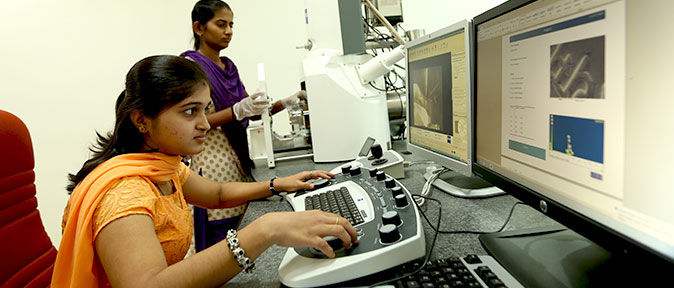
Laboratories
World-class laboratories give learning a practical dimension
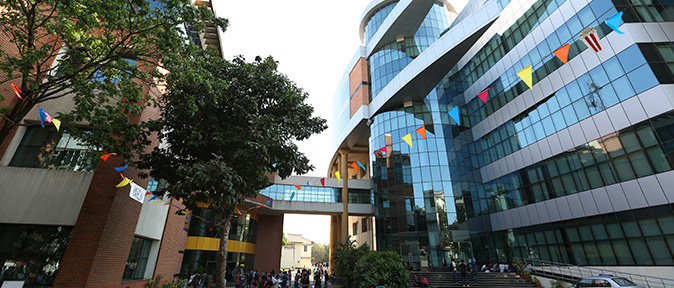
Innovation Centre
State-of-the-art Innovation Centre to facilitate multi-disciplinary research
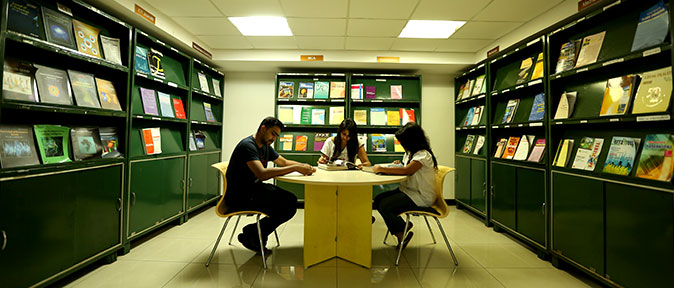
Libraries
Libraries have excellent resources for reference and study
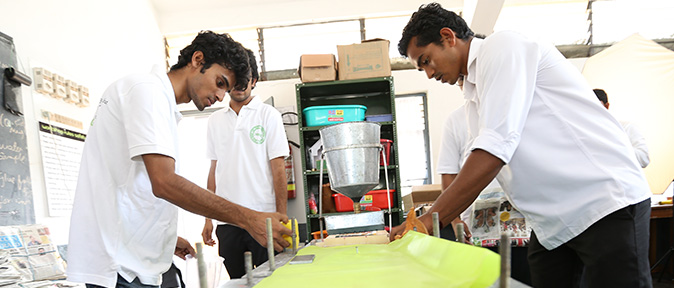
MUTBI
Paper tree - A green initiative by MIT students of MUTBI
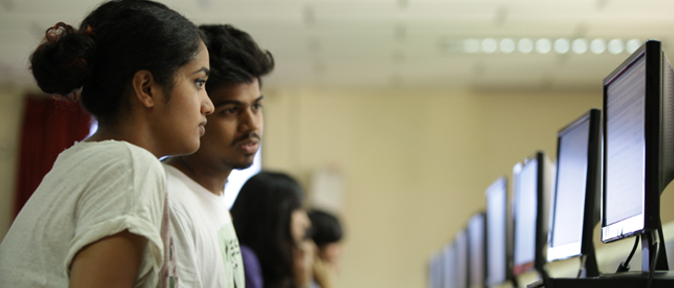
Computing Facility
Wi-fi campus with modern computing and digital facilities
E-News Letter
Testimonials

For me MAHE is a place with ample opportunities to grow professionally and personally.
Ashna Ranjan
MIT Manipal

Learning is an awesome experience at Manipal. This is the best place to be for students.
Rudi Rajkumar
MIT Manipal
MAHE is giving us wings to fly and providing us with resources necessary to make it big in life.
Shashank Tulsyan
MIT Manipal
MAHE has taught me the value of organisation and to be systematic in all my work.
Siddharth Bhasin
MIT Manipal

My experience at MIT has been great from the beginning.
N.J.Nischal
MIT
I’m glad I choose Manipal University.
Chaitanya Chauhan
Mechanical Engineering